
About Bio4PURConti
Polyurethanes are everywhere
The Challenge
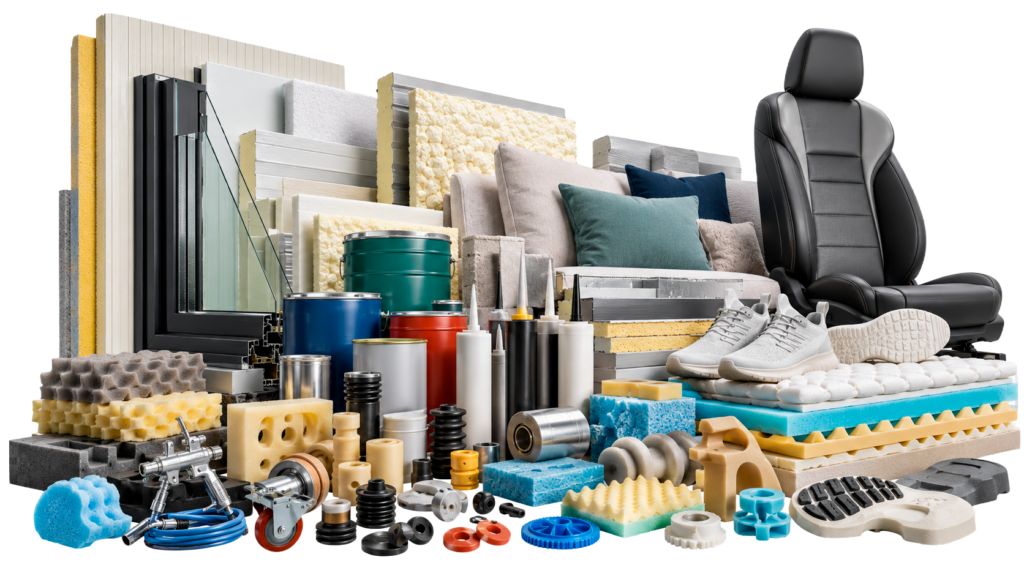
They insulate buildings, cushion furniture and car seats, seal windows and bind coatings and adhesives.
A large share of polyurethanes is made from aniline, a widely used platform chemical produced at massive scale. Today, that aniline still comes almost entirely from fossil resources, and its production releases significant amounts of CO₂ worldwide each year.
High performance materials have indispensable characteristics. We cannot do without them, so let’s transform their process!
The Idea
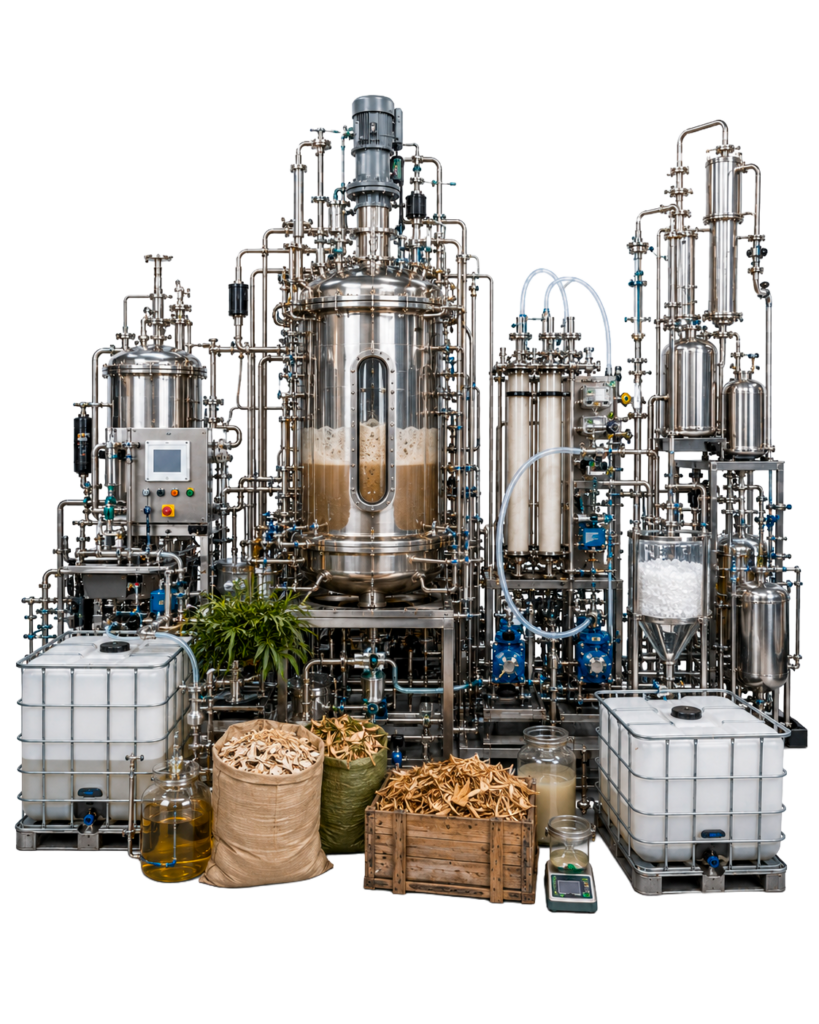
Bio4PURConti produces aniline via biotechnological instead of petrochemical process. Corynebacterium glutamicum, a proven industrial host organism, is engineered to produce 2-aminobenzoic acid as the critical intermediate. A subsequent chemical conversion transforms this intermediate into aniline.
The bio-based aniline provides a direct replacement for fossil-derived aniline, integrating seamlessly into established polyurethane production systems and supply networks.
Why continuous matters
The second idea is just as important as the first.
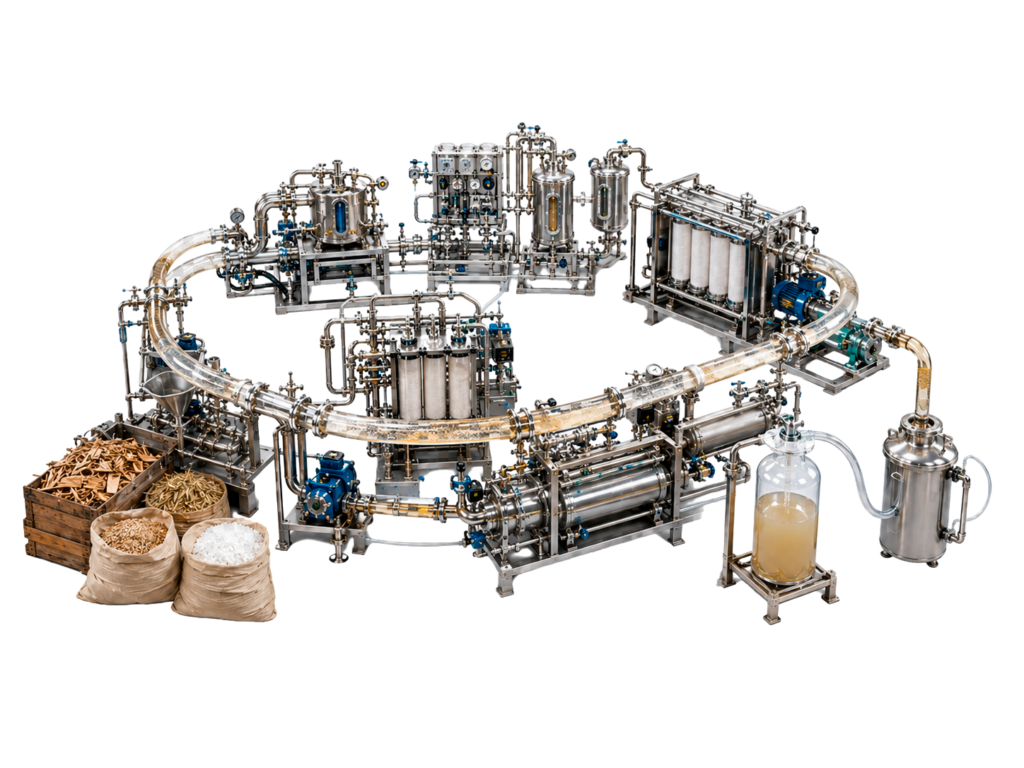
Conventional fermentation is a batch job, productive for a while, then stopped for harvesting and cleaning. A continuous process keeps going, with cells recycled back into the reactor so they keep working instead of being discarded.
Run well, this can strongly increase the amount of product per reactor volume over time, cut both the investment and the operating cost of a future plant, and reduce waste and water use. Continuous bio-production at this scale is still rare, which is exactly why the project exists.
The science, step by step
Strain development
Build microbial strains that produce the aniline precursor at high yield, stay genetically stable over long continuous runs, and can also use second-generation sugars from wood-based biomass.
Our approach combines advanced analytical data with precision genetic modifications to optimize metabolic pathways, enhance strain stability, improve energy efficiency, and enable processing of diverse renewable feedstocks.
Process development and demonstration
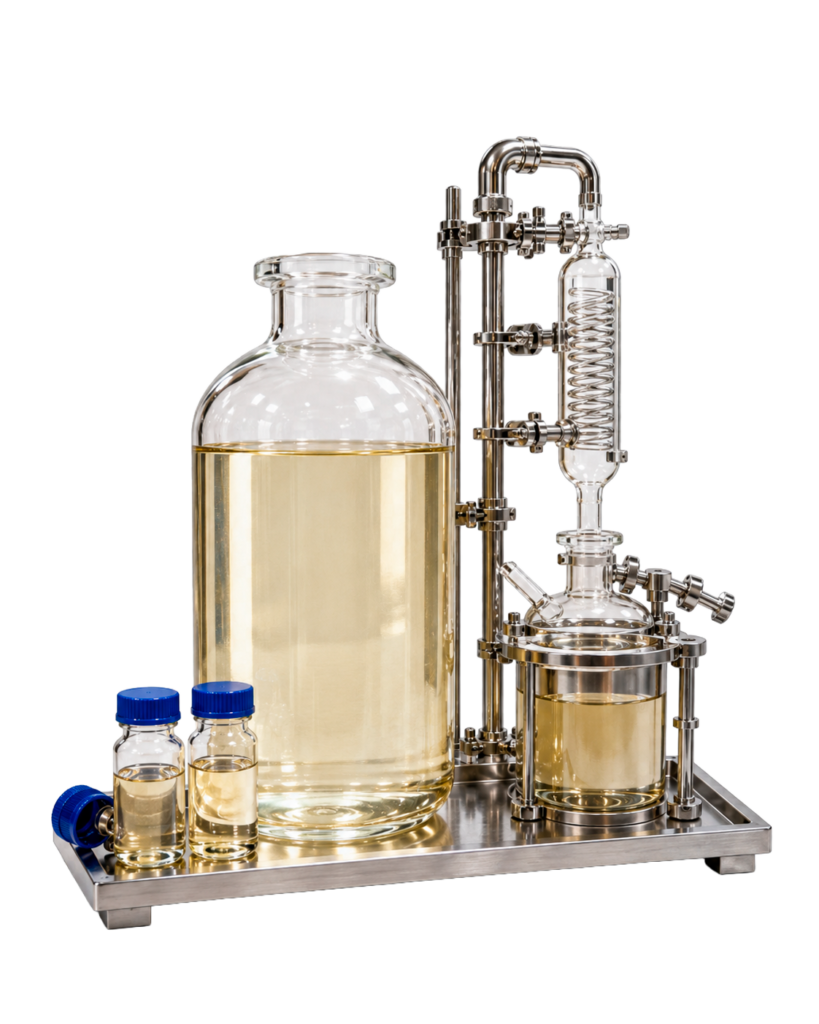
Turn the batch process into a continuous one with cell recycling, followed by continuous product separation. Convert the precursor to aniline and purify it by distillation. Recover additional value from side streams and scale the whole thing up.
Real-time analytics and process control
Develop the sensors, soft sensors and control systems that keep a long continuous run stable, and design low cost instrumentation for a future production plant.
Safety and sustainability assessment
Run a Safe and Sustainable by Design assessment and a life cycle analysis at each stage, comparing the bio-based route against fossil aniline, and draw lessons for assessing bio-based chemicals in general.
Exploitation and the Batch2Conti toolbox
Plan how the results reach the market, build an open toolbox so other processes can switch from batch to continuous, validate the bio-based aniline with committed industrial customers, and prepare policy recommendations.
Communication, dissemination and coordination
AEIMIS leads communication and dissemination, including this website, and Covestro coordinates the project and its reporting.
What we want to achieve
By November 2029, at the end of the 42 months, the consortium aims to demonstrate the continuous process at 1.5 cubic metres and produce at least one tonne of the bio-based building block at that scale. Beyond aniline, the project sets out to leave behind a transferable platform for continuous bio-based production of bulk chemicals, helping Europe build a stronger position in bio-based industries while working towards its climate goals.
These are project objectives and targets as defined in the Grant Agreement, not results achieved to date.
Sustainability, assessed not assumed
The project makes a clear distinction between hope and proof. Switching from oil to biomass can reduce the carbon footprint of aniline, and the project works towards a large reduction, with a long term ambition to push it below zero.
Whether that happens depends on real data: which feedstock is used, how much energy the process needs and what occurs across the whole life cycle.
The Safe and Sustainable by Design work led by VTT exists to measure exactly this, in three rounds of growing detail, always against fossil aniline as the baseline. The numbers the project publishes will come from that assessment.
Project facts
Full title | Bio-Based Continuous Production for Sustainable Polyurethane Industry |
Acronym | Bio4PURConti |
Grant Agreement | No 101292477 |
Call and topic | HORIZON-JU-CBE-2025, topic HORIZON-JU-CBE-2025-IA-04 (Innovation Action) |
Funded by | Circular Bio-based Europe Joint Undertaking (CBE JU), under Horizon Europe |
Duration | 42 months, 1 June 2026 to 30 November 2029 |
EU contribution | EUR 6,998,845 |
Total budget | EUR 8,362,570 |
Coordinator | Covestro Deutschland AG (Germany) |
Consortium | 10 partners, 7 countries |